To Mulch or Not to Mulch?
The Good, The Bad, and the Ugly
October and November are among our busiest seasons for mulching. Here in the southeast which includes our service area of Hillsborough, Chapel Hill and Durham, many gardens have fairly open planting schemes, often featuring tidy, compact, mounded plants that look so appealing in nursery containers. The result? Lots of empty space between plants, and lots of mulch to fill it. Most gardeners take it for granted that mulch is simply part of having a beautiful garden. But as it turns out, mulch is a little more complicated than it looks, and it's not always your garden's best friend.
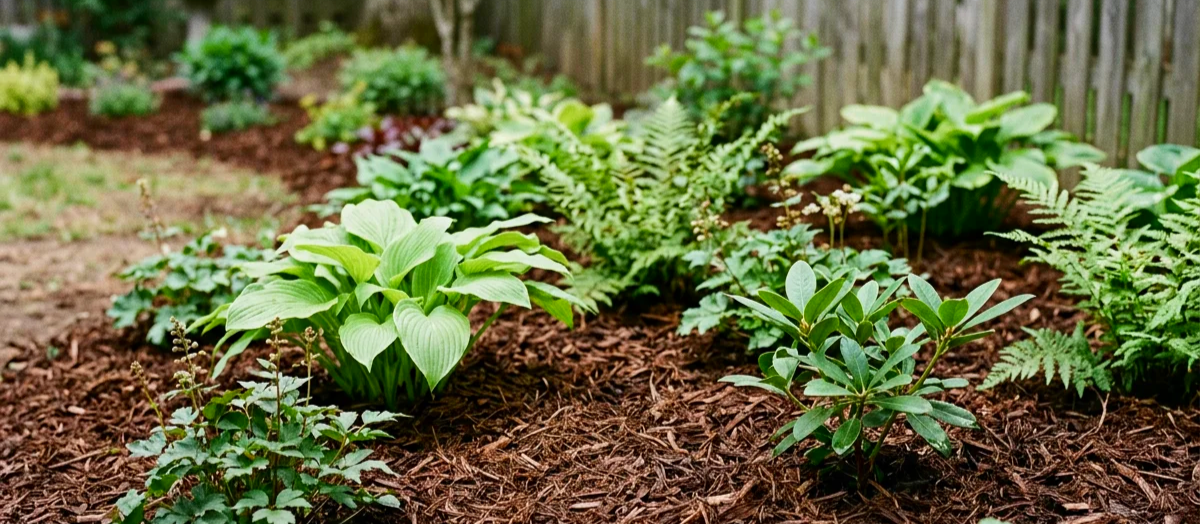
The Good
Let's give mulch some credit. At first glance, a freshly mulched garden looks pretty sweet, especially when the alternative is a collection of scraggly weeds popping up between your plants. Mulch suppresses, (though never completely prevents), weed growth as well as helps to retain moisture, builds organic matter, adds nutrients, and moderates soil temperature. Sounds like a pretty good deal, right? Well, not so fast...
The Bad
Unfortunately, mulch is one of those things where too much of a good thing can become a problem. When applied too heavily or piled against stems and trunks, mulch can hold excessive moisture against your plants. In trees, excessive mulching can encourage roots to grow around the base of the trunk, eventually girdling and strangling the tree. Not exactly the outcome we were going for!
Heavy mulch against trunks and stems can also create ideal conditions for rot and fungal diseases. Smaller herbaceous perennials are particularly vulnerable and may struggle or even die under the weight and moisture of a thick layer of mulch. Even large trees can be seriously damaged, stunted, or eventually killed when mulch is piled against their trunks year after year. Those infamous "mulch volcanoes" you see around newly planted trees are definitely doing more harm than good. And if that weren't enough, thick mulch can provide cozy accommodations for slugs and voles, neither of which needs an engraved invitation to move into your garden.
Last but certainly not least, applying mulch year after year can get expensive!
The Ugly
Here's the thing about gardens: plants die. It's just part of gardening. But when they aren't replaced, they leave gaps that practically roll out the welcome mat for weeds. And while a freshly mulched bed may look neat and tidy, a big expanse of brown mulch with a few lonely plants scattered around isn't necessarily the most beautiful or inviting landscape. Individual plants surrounded by a sea of mulch don't create the same natural beauty, richness, or sense of discovery that a densely planted garden can. If you're trying to create a more natural-looking garden, heavy mulching can actually work against you. Many of our wonderful native plants are perfectly capable of self-seeding and filling in empty spaces on their own. But when the ground is buried under a thick blanket of mulch, those seeds may never get the chance.
Sometimes, in our efforts to keep everything neat and tidy, we end up making more work for ourselves!
A Better Way
Plants make the very best mulch!
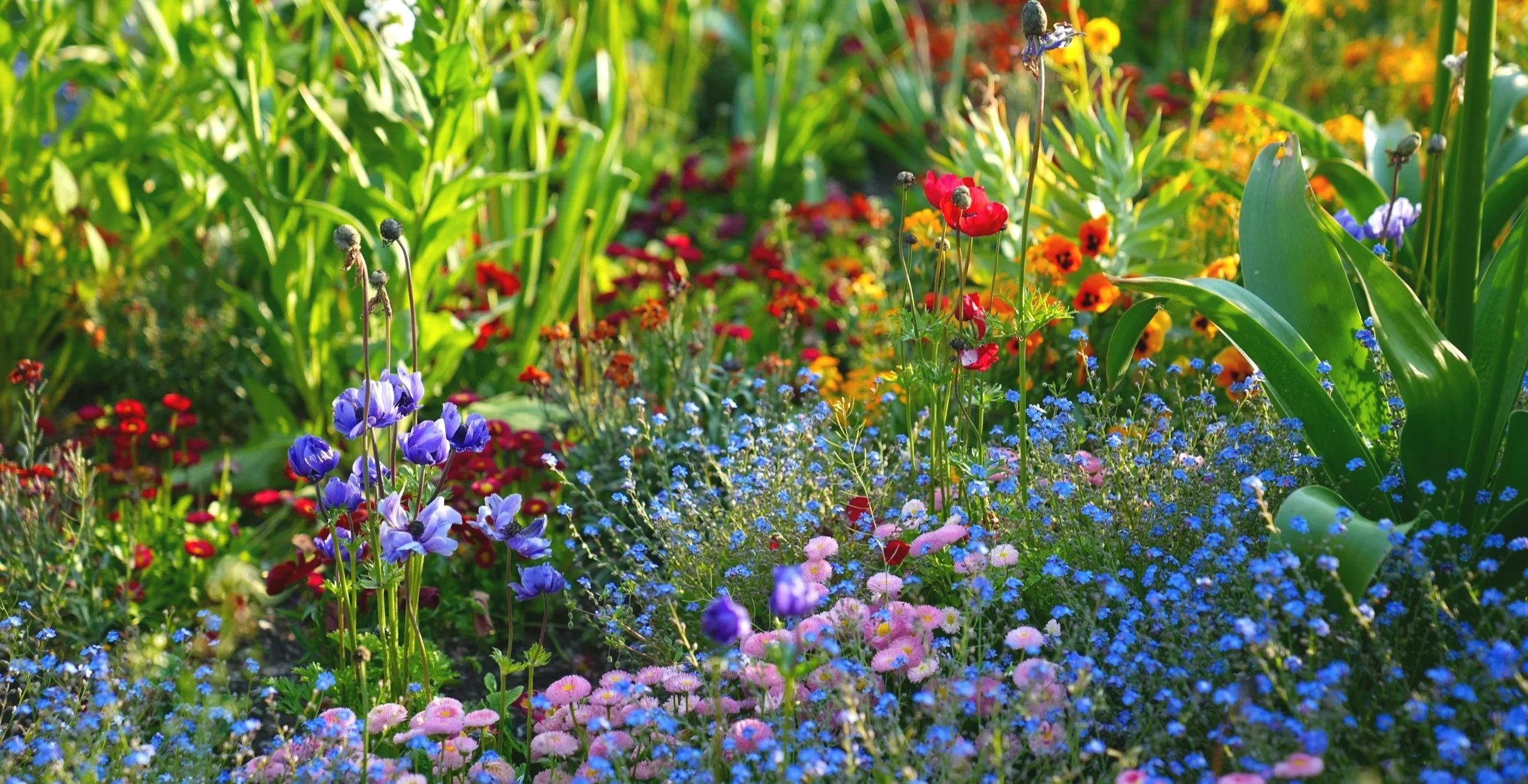
That's right. The best solution to all those empty spaces between plants may be...more plants! When you create a garden with dense, layered plantings that cover the ground, you can greatly reduce, or even eliminate, the need for mulch.
Think of plants as the earth's skin. Bare soil, even when covered with mulch, is a little like an open cut. And those weeds that inevitably pop up? They're nature's version of a scab, covering exposed ground until something more permanent can take hold. Nature doesn't particularly like bare soil, and she's pretty determined to cover it with something. The trick is to make sure it's something you want growing there! By planting densely and filling those gaps with desirable plants, you're giving weeds far fewer opportunities to move in. Even better, choosing native species to fill those spaces creates a healthier environment for our local ecosystem while making your garden more beautiful.
Some native plants are especially good at doing this work for you. Self-seeders like Aquilegia canadensis (Eastern red columbine), Viola sororia (common blue violet), and Lobelia cardinalis (cardinal flower) can spread naturally into available spaces when they aren't blocked by heavy mulch. These are just a few examples. Think of these natural “spreaders” as your garden's volunteer workforce, filling in gaps and holding space until you need to thin them or decide to plant something else.
Well-chosen, dense plantings also support our local ecosystem, especially when 70% or more of the plants are native species. And when done well, these layered gardens can create beautiful, inviting spaces that feel much more like nature and a lot less like a collection of plants sitting in a sea of mulch. Want to see what this looks like in action? Cates Creek Park in Hillsborough offers a beautiful example of a layered, densely planted garden where weeds have a hard time getting established and mulch is hardly needed. For even more inspiration, visit the Blomquist Garden of Native Plants at Duke Gardens or the North Carolina Botanical Garden. Both are wonderful places to see how plants naturally grow together and fill spaces in a variety of local habitats.
So, Should We Give Up Mulch Altogether?
Not necessarily! Mulch still has an important role, especially in newly planted gardens where plants haven't had time to fill in. But ideally, mulch shouldn't be the main attraction. The plants should be!In a first-year perennial garden, a light layer of mulch, around one inch or less, can help protect the soil while plants become established. Trees and shrubs may benefit from a somewhat deeper layer, provided it's kept away from their trunks.
Here's one of our favorite alternatives to bagged or bulk hardwood mulch: leaves! Those leaves falling all over your yard each autumn? They're not just another chore on your weekend to-do list. They're a valuable resource for your garden. Leaves help build healthy soil, provide nutrients and organic matter as they decompose, and support the many beneficial insects and other organisms that call your garden home. They generally break down more readily than shredded hardwood mulch, particularly when chopped or shredded, and when applied lightly, they're less likely to smother smaller herbaceous plants. Best of all, they're free! If you don't have enough leaves on your own property, some local municipalities offer collected leaves to residents at no cost.
Sometimes the best gardening supplies are the ones nature delivers right to your doorstep.
The Bottom Line
Mulch certainly has its place. It helps build soil, retain moisture, and keep weeds at bay. But a thoughtfully planted garden can accomplish many of those same goals while offering so much more. More plants, fewer weeds, less mulch to buy and spread, and more food and habitat for wildlife. What's not to love?
So the next time you're looking at an empty patch of mulch in your garden, consider whether what it really needs is another load of mulch...or just a few more plants. Need help or advice about which plants may work best in your landscape to help fill in the empty spaces? Just give us a call, (919- 224-9697), or email us at admin@birchmeadowgc.com